
Leica R(evolution)
by David Ulloa
March 2nd, 2025
Leica is M. Everyone knows that. Except for those that know it's more than the iconic rangefinder. For me, it started with wanting more than the 28mm focal length that the Q offered. Sure, it crops to 35mm and 50mm, but I wanted to shoot it for real, not with a digital crop. Many exhaustive research sessions later, I decided that what I wanted was the Summicron-R 50mm f2 lens to adapt to mirrorless. It was, of course, love at first focus. I think of it as the single worst decision of my life...for my wallet that is. Because what ensued was an obsessive hunt for my favorite Leica R lenses.

© 2025 David Ulloa (Leica R4s, Elmarit-R 28mm)
Over the next year or so I would amass a solid collection of Leica R glass. Joining the Summicron-R 50 were the Elmarit-R 28mm, 35mm, 90mm, and 135mm f2.8 lenses, and eventually the Vario Elmar-R 28-70mm f3.5 zoom lens. And as I collected these lenses, the desire to shoot them with film grew as well. It was finally time to commit to a Leica ecosystem.
Hey! Nice Minolta!
My first R mount camera was the R4s. I wanted something with a built in light meter and the option to shoot fully manual as well as with something simple like aperture priority. The R4s was the perfect candidate. I found, however, that many folks online didn't have an appreciation for these cameras. In fact some places, like the Leica subreddit, were downright dismissive of these cameras. I couldn't understand it. And why the fascination with calling them Minolta's? Sure, Minolta and Leica collaborated, but was that a bad thing? Minolta's history is one of excellence and in the technological side of camera-making in particular.

© 2025 David Ulloa
At any rate, I really enjoyed making photos with this camera. It really got me to commit to film and little-by-little I was leaving digital photography behind. But I was noticing that I couldn't truly commit to film because I still used my digital cameras for low-light and nighttime photography. So, I had an idea: have two R bodies and relegate one to really fast film that I could use at night. In this way, I never needed to worry about finishing a roll before sunset/sunrise.
Leicaflex Calling
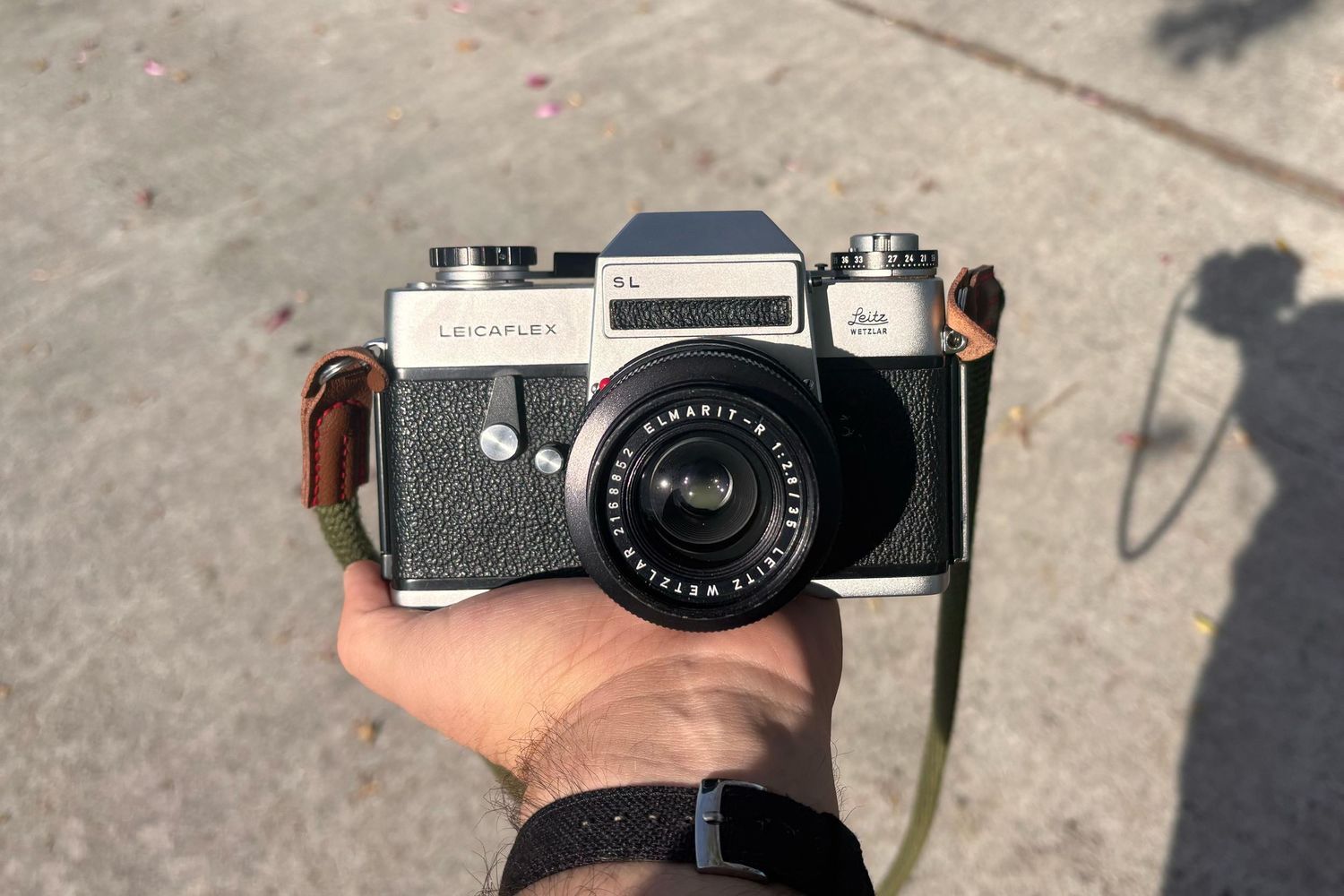
I had decided that I wanted a totally mechanical shutter. I didn't mind a battery for a light meter, but I wanted to fire the shutter without one. Something about that seemed more romantic to me. That left me with a few options. I could stay in the R range and get an R6 or R6.2, or I could fall back in time further and pick up any of the three Leicaflexes, including the SL and SL2.
© 2025 David Ulloa
From my research I found that the Leicaflex models had bigger and brighter viewfinders, rubberized cloth shutter curtains, and a top speed of 1/2000. It seemed like a no brainer to me, especially when I saw the prices compared to the R6/R6.2. So I waited for the right one to come along and scooped up a Leicaflex SL in chrome. My old Pentax ME was a chrome model and I loved that it didn't look like any of the modern digital cameras today. The chrome look kind of exists in the film era in my mind.
There was a problem, though. This thing was so much more fun to use than I had imagined! What had started out as a second body had turned into a primary use camera with one roll.
So big and bright is the viewfinder, that in collaboration with the unique ground glass focusing screen, this camera may be the easiest of any to focus. Combine that with the long and exact focus throws of R lenses and you've got an amazing system for just about any purpose. Street photography? Check! Portraits? Check! Nature? Check! Macro? Check! Landscape? Check! There is quite literally nothing this camera and it's lenses can't do!

© 2025 David Ulloa (Leica R4s, Vario Elmar-R 29-70mm)
Ingloriously in Love
When I joined the Inglorious Leica Lovers, I believe only one other was an R shooter, Stephen Podrasky. With a background in fine art photography, Stephen had utilized an R8 for much of his career. But as we talked more and more about these R cameras, the number of R shooters grew!
We were soon joined by Stacey Pearson, who has made plenty of LFI gallery selections with her Leicaflex SL. She very quickly adapted to the system and rarely jumps back to her previous M cameras. She has, similarly to myself, started adapting R lenses to the digital Leica SL, something Stephen is a fan of as well.

© 2025 David Ulloa (Leicaflex SL, Elmarit-R 35mm)
Today, many more Inglorious members are using Leica R. Jon Isaac, Leanne Brody, and Stephen Grasso have all joined the Leica R(evolution). Even with my preoccupation with the M3, I still go back to the Leicaflex SL! Since last year, I have favored the Elmarit-R 35mm f2.8. There is nothing like it in the Leica M range. Oh, sure, Leica made 35mm f2.8 lenses for M, but one that could focus this close?! Not a chance! Just check out this example of my son, Link, mean mugging me on a sunny day.

© 2025 David Ulloa (Leicaflex SL, Elmarit-R 35mm)
There is obviously something special about the Leica R system and it's a shame that more folks don't realize it. The R4-7 are so small and light, that only an M can compare. The R8-9 are likely the last truly great film cameras ever made. The Leicaflexes are so tank-like, that they'd survive a bomb blast. And each is so immaculately built and engineered that it makes one wonder if they're crazy or the rest of the world is crazy for not having jumped on the camera sooner.
The lenses are small, built to perfection, and designed by the same geniuses that designed their M counterparts. A quick search will tell you that the amazing Walter Mandler designed many of these R lenses. And while not Leica M small, these lenses are significantly smaller than anything available from manufacturers today. Even with an adapter on my digital SL, these lenses are smaller and easier to use than anything else.
So, if you are shooting film and aren't shooting with Leica R, why not? And if you're shooting digital? Why aren't you adapting these lenses?! Get on board the Leica R(evolution) folks.
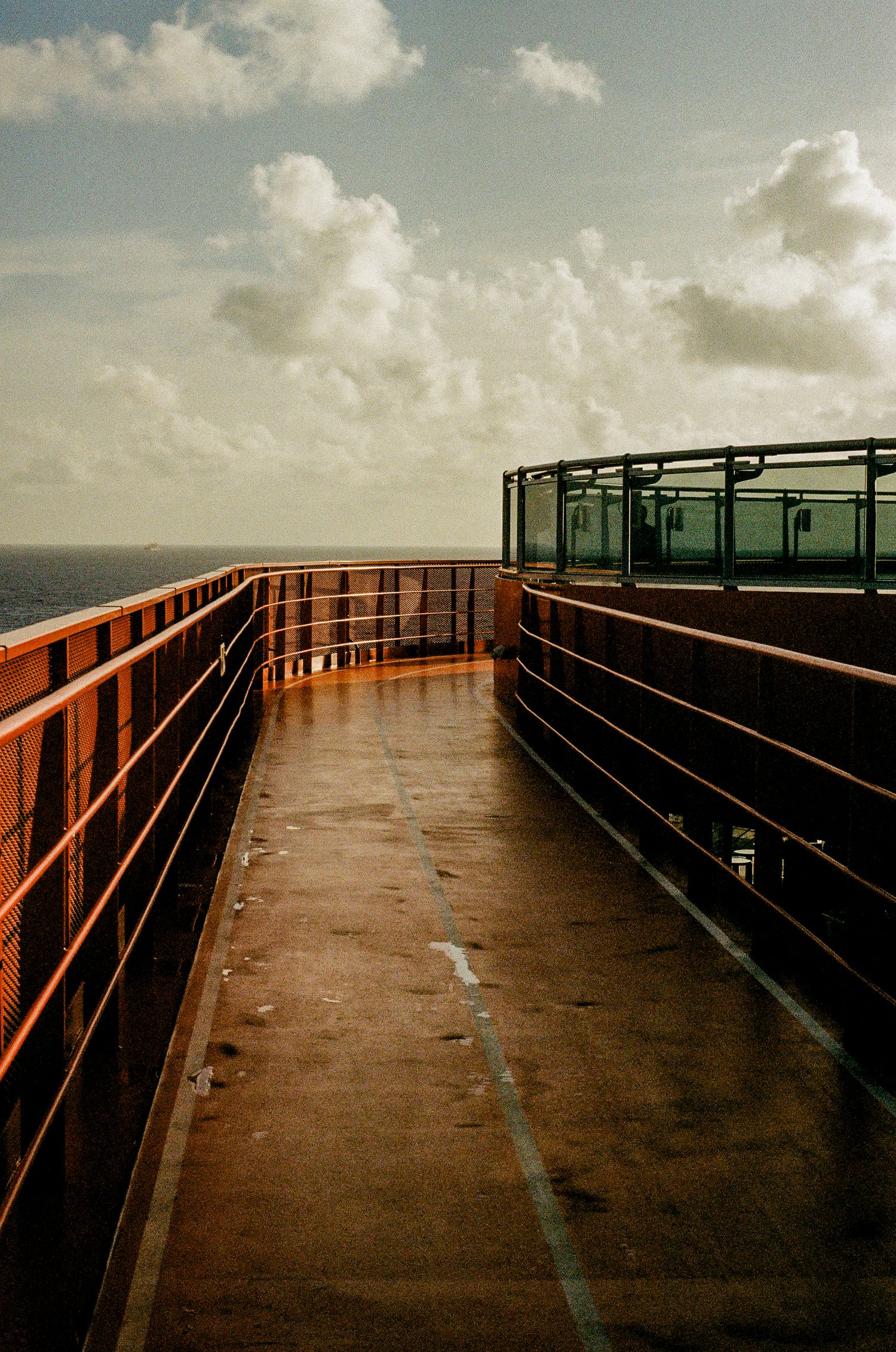
© 2025 David Ulloa (Leica R4s, Summicron-R 50mm)