Ideas Without End
by Stacey Pearson
February 5th, 2025
I came across the phrase "ideas without end" through Richard Lorenz’s biography of American photographer Imogen Cunningham. Cunningham is one of my favorite photographers, and a week doesn’t go by without me scouring her Trust’s webpage and studying her technique.
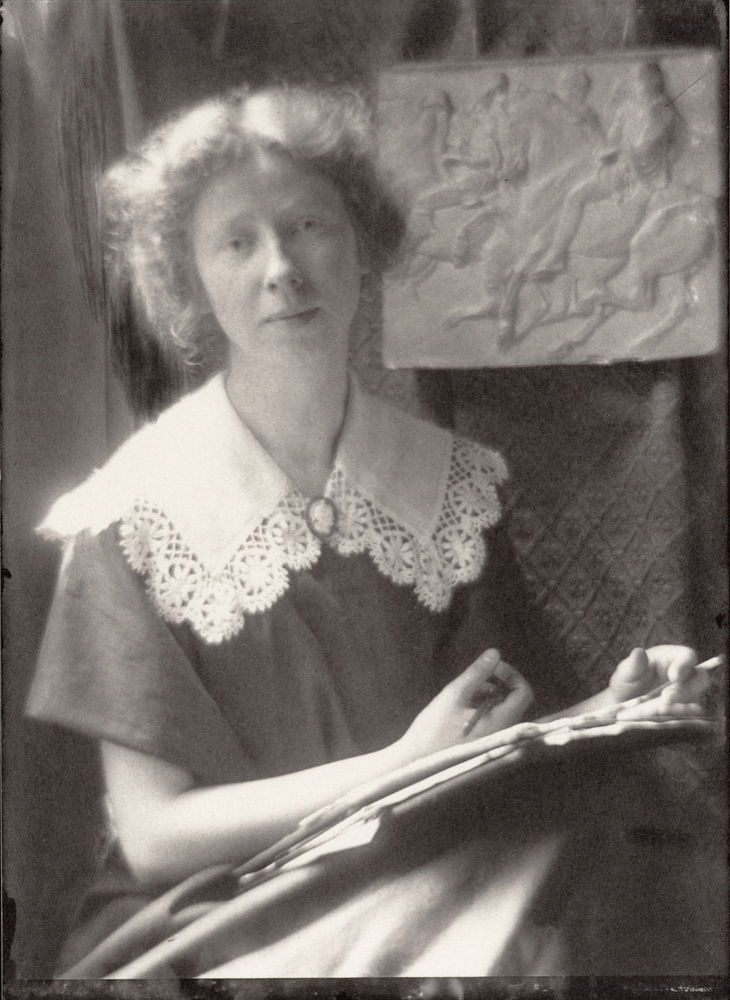
Self-portrait c1910 © Imogen Cunningham Trust
Imogen Cunningham died in 1976 at age 93 in San Francisco, California, leaving the photographic and art worlds a true gift—a body of work touched by and influencing many movements and styles. From purely scientific documentation to Pictorialism, Straight, and even Street photographic styles, Cunningham was dedicated, passionate, and prolific. Perhaps most of all, Imogen Cunningham was innately curious. She remained fascinated with the science and art of photography over her nearly seven decades of work.
Imogen Cunningham eschewed the idea that styles were partisan camps or that genres were boundaries limiting her work. Instead, her photographic mind was open to beauty, no matter the subject. She said, “To worship beauty for its own sake is narrow and one surely cannot derive from it that aesthetic pleasure which comes from finding beauty in the commonest things.” However, her photographs are far from ordinary.
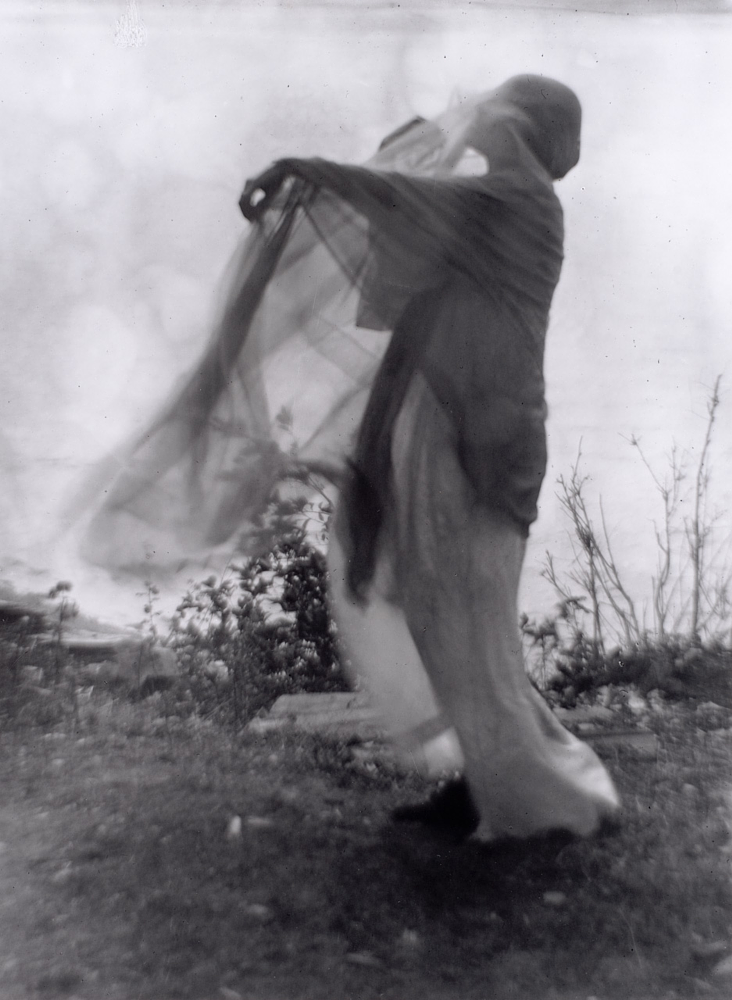
The Wind c1910 © Imogen Cunningham Trust
Imogen Cunningham was born in 1883 in Portland, Oregon, and she lived with her parents in a commune until 1891, when the family relocated to Seattle, Washington. In 1903, Cunningham entered the University of Washington, paying her way, and studied chemistry while also turning her focus to photography. For her first camera, instead of the popular—and more straightforward to learn and operate—Kodak Brownie box camera, she opted to purchase a 4x5 wooden view camera that came with a correspondence course from the American School of Art and Photography. Cunningham graduated from the University of Washington with a major in chemistry in 1907, and her senior thesis was titled “The Scientific Development of Photography.” That same year, she was struck by Gertrude Käsebier’s photograph Blessed Art Though Among Women and made her career decision.
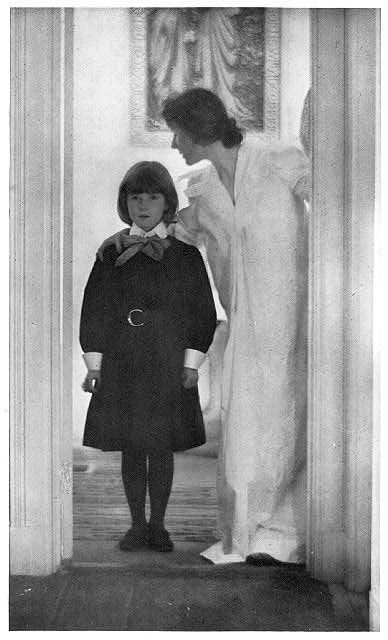
Blessed Art Though Among Women c1900 Library of Congress
The fact that Imogen Cunningham had a photography career at all cannot be overlooked. In the years after university, she studied under Edward Curtis, mastering the darkroom and platinum printing, and then traveled to Europe under a fellowship. After mingling with Käsebier and Alfred Stieglitz in New York, and only 27 years old, she returned to Seattle and opened a portrait studio. Cunningham believed photography to be an egalitarian medium. In her 1913 essay “Photography as a Profession for Women,” she wrote, “Photography is ... a craft or trade to which both sexes have equal rights.” However, it would be another six years before the 19th Amendment to the U.S. Constitution afforded women the right to vote.
While raising three children, Imogen Cunningham gained a reputation for her thoughtful yet intimate portraits, including scandalous nudes of her husband, and found initial success with Pictorialism. In the early 1920s, though, her artistry began to evolve. She experimented with double exposures, abstract forms, and botanical photography, capturing the beauty and complexity of plants in unique ways, described and praised as cutting-edge. Her botanical work earned her the critical acclaim she sought since first seeing Käsebier’s image. In 1932, Cunningham became one of the founding members of Group f64, a collective of eleven West Coast photographers, including Ansel Adams, who dedicated themselves to promoting photography as an art form. She continued working as a photographer until her death.
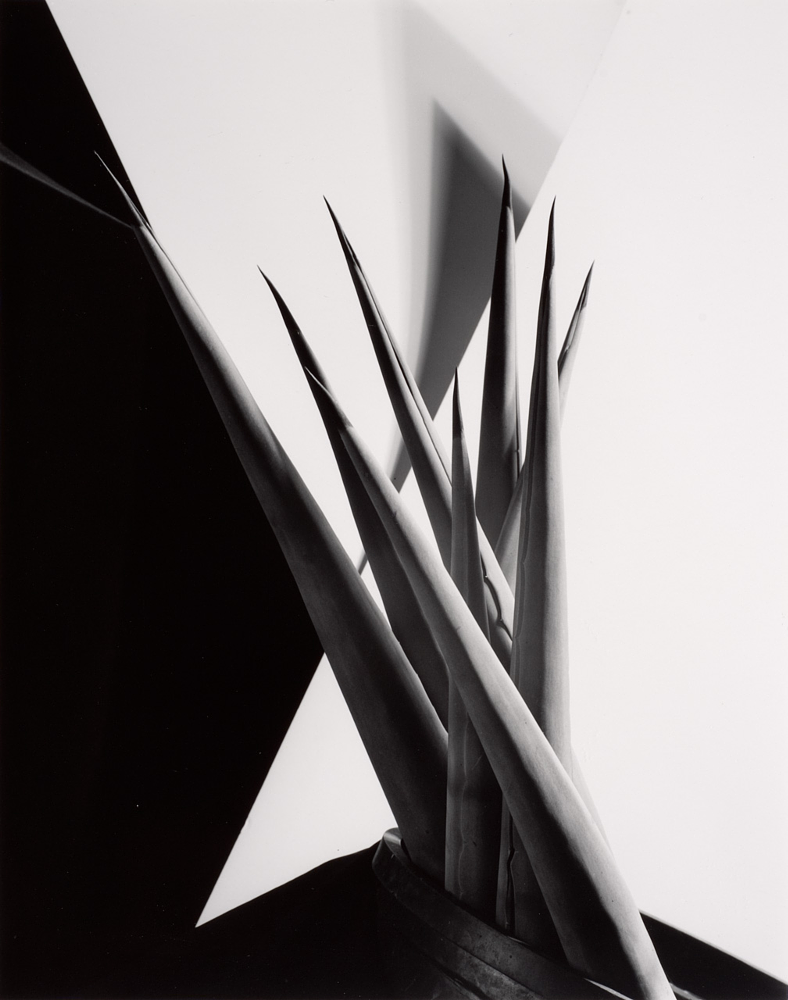
Agave Design I c1920 © Imogen Cunningham Trust
Imogen Cunningham possessed the common traits of the earliest photographers—the insatiable desire to experiment and explore. She was a scientist, an artist, a tinkerer, unafraid of boundaries and undeterred by obstacles. As a woman sometimes relegated to the photographic sidelines, Cunningham felt free to embrace movements and learn and absorb techniques from others until her unique perspective and style emerged through her botanical images.
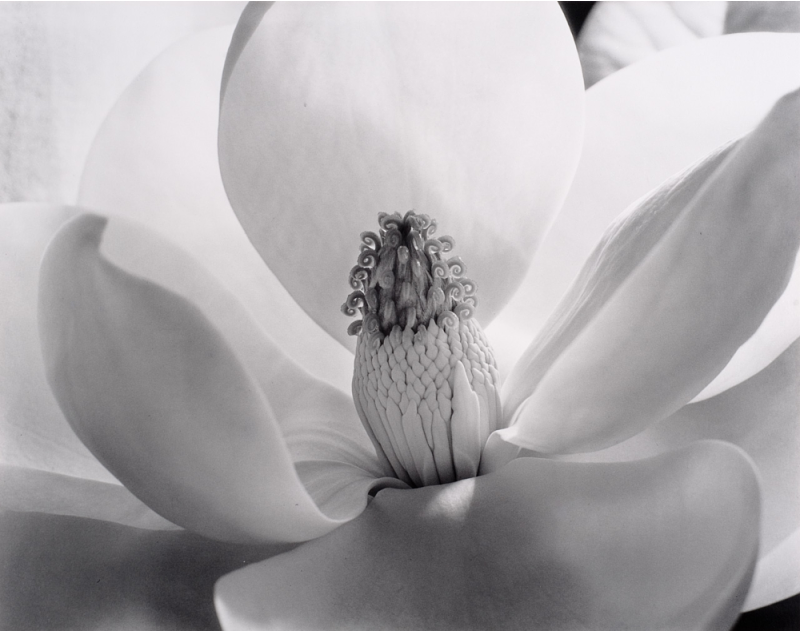
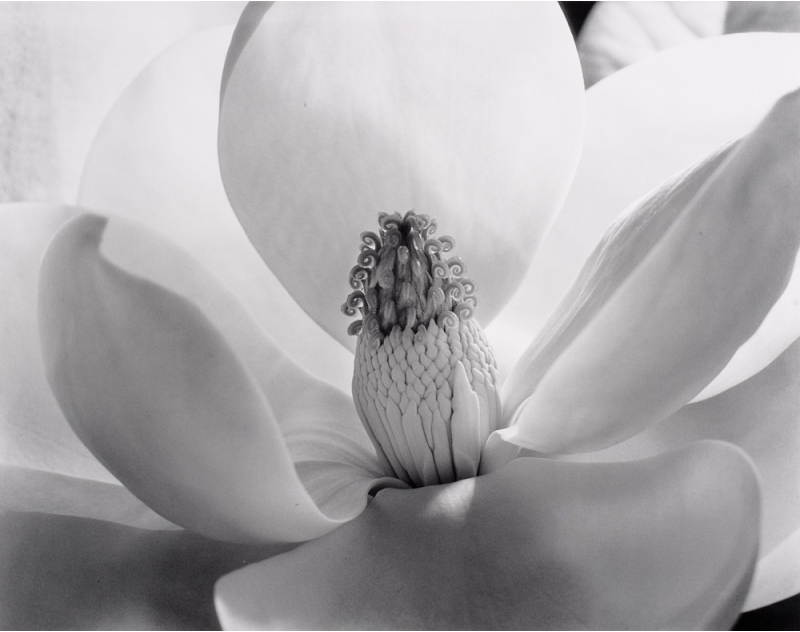
Magnolia Blossom c1920 © Imogen Cunningham Trust
As active photographers, our ideas are endless when we practice intellectual curiosity. We may see a scene and jot down the location in a notebook or bookmark it in our minds. We may lose sleep over a project that has sparked our attention. We read. We watch. We absorb others’ work. Our imaginations and creativity are limitless when our minds are open to beauty wherever we see it.
Before she died, Imogen Cunningham chose a Chinese chop composed of three characters representing her name phonetically, Im-o-gen. These Chinese characters translate into “ideas without end.”
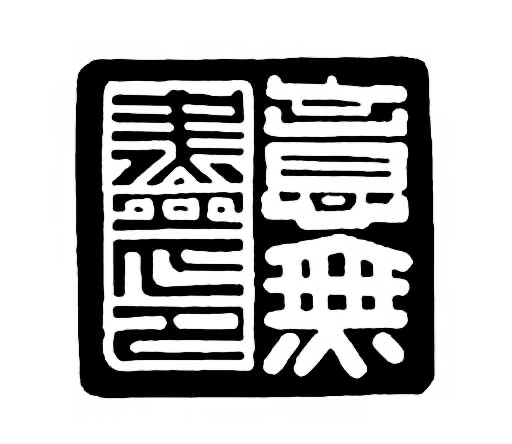
Imogen Cunningham Mark © Imogen Cunningham Trust